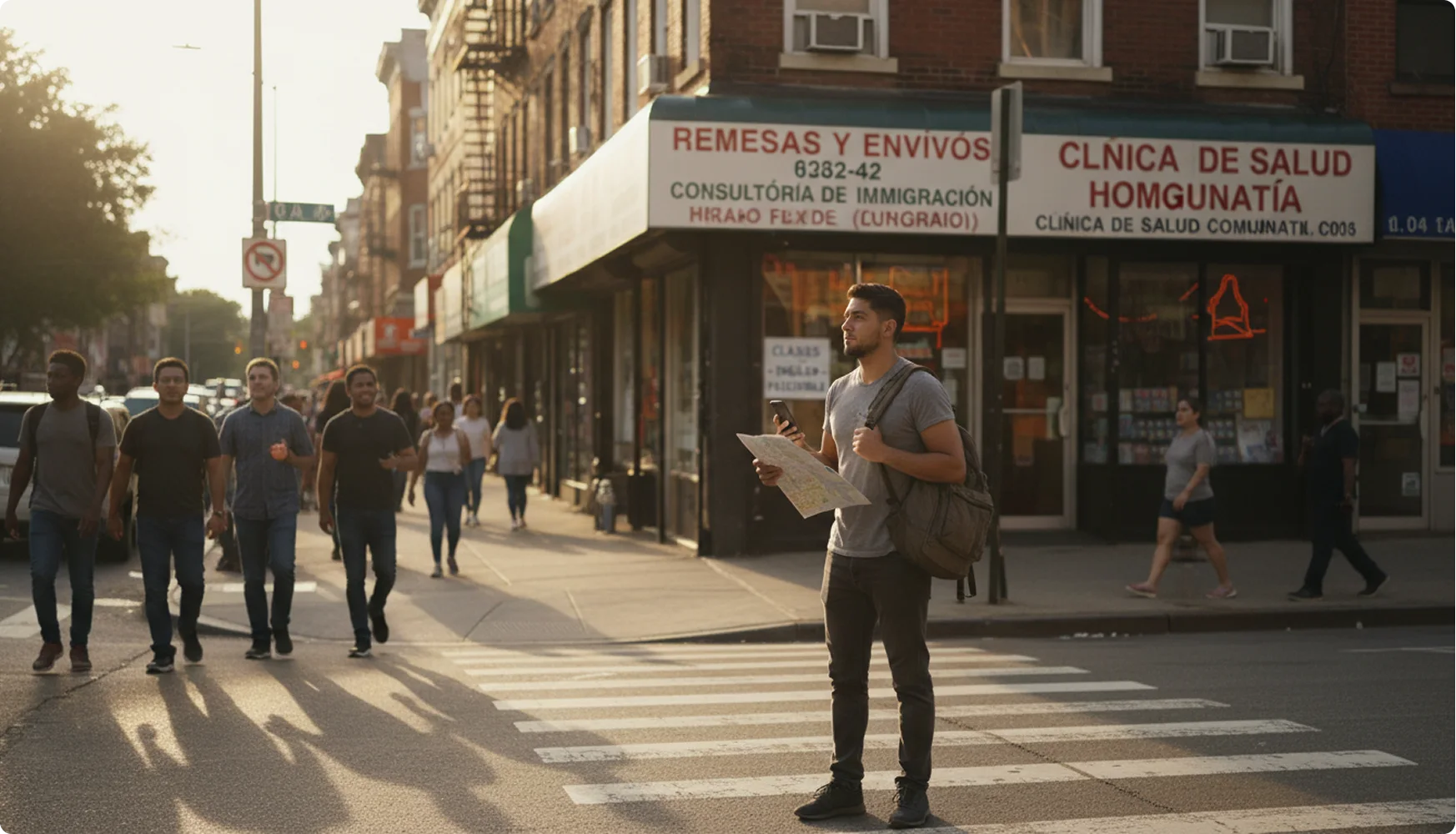

There is an almost invisible moment in any financial transaction that ends up being the most important of all. It doesn’t happen the instant the teller presses “send” on the computer, nor when your family receives the money in their home country. It happens much earlier, in the meticulous training and empathy with which the team prepares to welcome you.
When looking for a place to send money, many decisions are made based purely on immediacy or on using the trendy digital app. It is assumed that all teller windows are the same, strangers on the internet are blindly trusted, and cold, distant treatment is normalized. However, what truly defines whether the fruit of your hard work in the United States will safely reach the right hands is not an automated algorithm, but the depth to which the advisor understands your true needs and vulnerabilities. When this human understanding and security filter are missing, what often follows is the risk of falling for scams. Not necessarily because the technological system fails, but because there is no solid human barrier providing meaning, protection, and guidance for every dollar you try to send home.
Your Transaction Isn’t Just Processed; It’s Interpreted and Protected
A common mistake is thinking that a money transfer business consists simply of “receiving bills and typing a name.” In reality, it is about understanding the effort behind that money and transforming it into a secure process with pure protective logic. Every client has a story and a reason for sending funds that isn’t always obvious at first glance.
Unfortunately, there are extortion and fraud networks where criminals threaten vulnerable people—for example, with releasing explicit intimate videos—demanding urgent transfers of thousands of dollars to countries like Colombia or Mexico. When the teller doesn’t carefully observe the customer’s nervousness, the transaction ends up catering to the criminal’s rush and not the user’s safety.
Therefore, before thinking about fees, it is worth pausing to consider how the place you visit takes care of you: what training the staff receives to detect if you are a victim of fraud, what key questions they ask to protect you, and what level of involvement they have to even help you block social media or change your phone number if you are being extorted. That active observation completely changes the approach to your financial security.
Key Security Aspects to Clarify Right at the Teller Window
There are preventive decisions that, if not made at the start through good team training, resurface hours later as savings lost forever. And that stolen money costs tears and peace of mind. Some points that Kiosko Multiservicios clearly defines are:
-
The correlation between a customer’s nervousness and the moral obligation to have them sign a fraud prevention sheet if something doesn’t add up.
-
The actual use of rate analysis to fight for a better exchange rate, ensuring your family receives more money over there.
-
The limitations of cold apps (like Remitly or Wise) that will never look you in the eye to ask if you are being threatened.
-
The level of trust in charging fair fees for check cashing, without taking advantage of those who don’t meet all the requirements of big banks.
The peace of mind of your family is a direct result of the honesty with which your transfer was processed today. These are not minor details. They are the invisible structure that protects the immigrant community’s assets.
When There Is No Human Protection, the Customer Reacts to Fear
One of the clearest signs of poor service is when the operator only cares about collecting a quick commission, ignoring whether the customer cannot read, doesn’t understand the language, or is trembling with fear when sending the money. Instead of moving forward with direction and safety, the immigrant’s financial life begins to depend on luck.
Although this might seem like the norm in giant corporations, it creates a cumulative effect of distrust. Procedures become cold, the elderly or those who haven’t mastered technology feel excluded, and the outcome starts to depend on “clicking a button” without understanding what is happening. This doesn’t happen due to a lack of capability on the customer’s part, but due to a lack of empathy and service definition from the company.
Thinking About Long-Term Well-Being Changes the Value of Your Money
Many choices about where to do business are based on saving a couple of minutes on a mobile app. But true peace of mind is not experienced solely through speed. It is experienced through the certainty of knowing that, if there is a problem, there is a physical branch in Phoenix and a real person willing to help you solve it.
That is where factors that are often forgotten come into play: how the staff responds when a transfer is delayed, the ease of having things explained in Spanish—or even the effort to understand Mayan languages—and how the service adapts to your comprehensive needs. When these variables are not considered, the result might be a fast transfer today, but an unsupported headache tomorrow.
At Kiosko Multiservicios, we like to start with a smile and an honest question, not treating you as just a transaction number. We want to understand what you truly need to progress in this country and how we can genuinely be one Latino supporting another Latino.